Teaching with technology: Virtual reality, 3D scanning in humanities classrooms
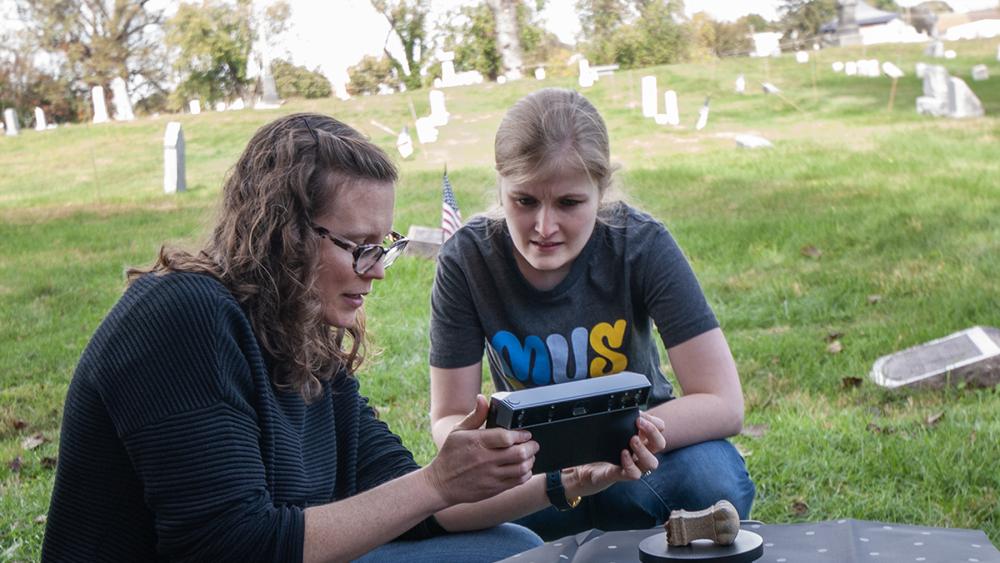
In fall 2025, Kupfner and students in her public heritage practices class spent time at Lincoln Cemetery, the oldest surviving Black cemetery in Harrisburg, Pennsylvania, where the nonprofit organization SavingOurAncestorsLegacy is working to restore the cemetery and preserve the stories of those buried there.
Students used 3D scanning apps on cell phones or tablet devices or a handheld 3D scanner to capture objects of interest related to their research projects, which explored subjects from headstone design to the stories of people buried in the cemetery.
Payton Becker, who is studying for her doctorate in American studies and graduate certificate in heritage and museum practice, worked with Kupfner to 3D scan coffin handles uncovered at the cemetery. They worked to find the best lighting and setup to capture the details.
“I think that 3D scanning can open up unique avenues of inquiry,” Becker said. “It also requires you to slow down and really look at the object you are scanning — to notice the details and how the different parts connect and work together. This ‘slow looking’ is really important to material culture methodology, which is what I specialize in, so it was nice to encounter an object in a different way (through the 3D scan) but apply a familiar method.”
Having a 3D scan also allowed her to revisit the coffin handles and examine them again later — a process that could be useful for fragile objects that need limited handling, she said.
Kupfner said that while she integrates VR and digital tools into classes, she does so to help students become more attentive to the material world. Visiting the cemetery, students were able to notice physical details – like the names of stone masons on headstones, for example.
“I was impressed by the level of curiosity and care displayed by these students — and they made some remarkable scans that document and digitally preserve some of the material culture of this amazing site,” she said.
Kupfner said the TLT fellowship has been a wonderful experience.
“Not only have I been able to bring 3D scanning technology and VR headsets into many of my classes, but I have been able to work with excellent instructional designers and technical experts to think through the best ways to integrate these technologies into classes,” she said. “I never want this work to feel gimmicky or tacked on. Instead, I am interested in using technology in thoughtful — and even sometimes critical -— ways to help us get closer to understanding, interpreting, and sharing history and our material world in rigorous, engaging, and accessible ways.”
link