DHS Proposes Regulatory Changes to Reform the Student, Exchange Visitor, and Foreign Media Visa Programs
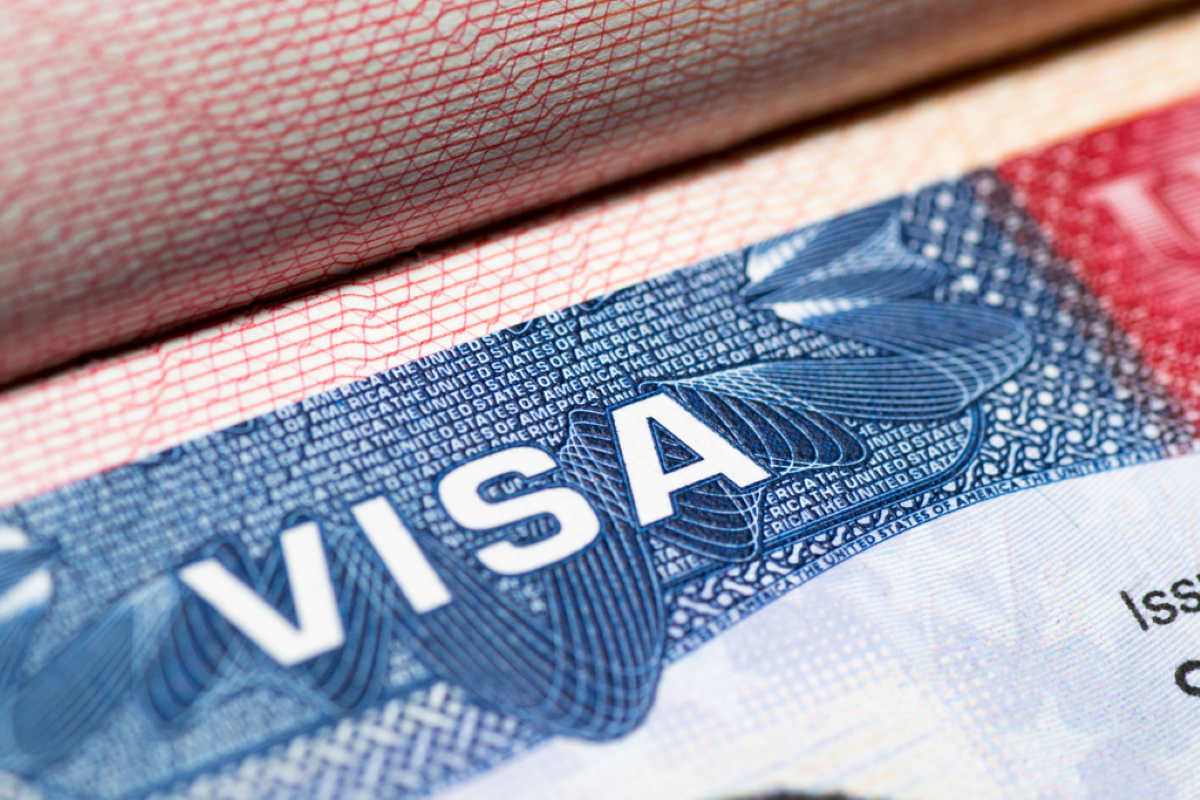
The Center for Immigration Studies submitted a public comment on September 29, 2025, to support the U.S. Department of Homeland Security’s proposed rule titled “Establishing a Fixed Time Period of Admission and an Extension of Stay Procedure for Nonimmigrant Academic Students, Exchange Visitors, and Representatives of Foreign Information Media”. With this rulemaking, DHS proposes to amend its regulations to end “duration of status” (D/S) for the F (student), J (exchange visitor), and I (foreign media) nonimmigrant visa programs.
This rule is a revival of a similar regulation change that the first Trump administration proposed in 2020. The Biden administration rescinded that proposal in July 2021.
Nonimmigrants visiting the United States on D/S visas do not have a fixed end date, on which their authorized period of stay terminates, printed on the Form I-94, Arrival/Departure Record. Instead, these nonimmigrants are allowed to remain in the United States for as long as they maintain the conditions of their immigration status.
Specifically, this rule proposes, in addition to other substantive, technical, and clarifying amendments, to:
- Provide for a fixed time period of authorized stay for F, J, and I nonimmigrants and provide procedures specific to the transition from D/S;
- Set the authorized admission and extension periods for F and J nonimmigrants to the program length, not to exceed a four-year period;
- Prohibit F-1 students at the graduate education level from changing programs at any point during a program of study;
- Outline procedures and requirements for F-1 nonimmigrants who change educational objectives while in F-1 status and require any nonimmigrant who has completed a program at one educational level to only be allowed to begin another program at a higher educational level while in F-1 status and prohibiting a change to the same or a lower educational level while in F-1 status;
- Decrease from 60 to 30 days the allowed period for F-1 nonimmigrants to prepare to depart from the United States after completion of a course of study or authorized period of post-completion practical training;
- Provide for collection of biometric information in conjunction with an EOS application;
- Limit language training students to an aggregate 24-month period of stay;
- Replace D/S for I nonimmigrants with admission for a fixed time period until they complete the activities or assignments consistent with the I classification, not to exceed 240 days, with EOS availability;
- Codify the definition of a foreign media organization for I nonimmigrant status.
In our comment, CIS argued replacing D/S with a fixed period of authorized stay that can be extended by USCIS supports congressional intent, strengthens the integrity of the immigration system, promotes national security, and brings these programs in line with requirements for other nonimmigrant visa programs. CIS supported the proposal’s other reforms that reduce the potential for visa fraud and the phenomena of “lifelong” foreign students.
CIS also recommended that DHS end post-graduate Optional Practical Training, a program that is not authorized by law and allows F-1 visa holders to obtain work authorization post-graduation. CIS explained that after an F-1 visa holder is no longer participating in a course of study, they are no longer maintaining the terms of the status and should not be awarded work authorization through the F-1 visa.
Finally, CIS analyzed DHS’s interpretation of the National Environmental Policy Act and recommended that DHS add a categorical exemption that can be applied to rules that are not designed to increase immigration to the United States.
link

![Student Loan Debt Statistics [2026]: Average + Total Debt](https://educationdata.org/wp-content/uploads/2025/03/page-1-3.png "Student Loan Debt Statistics [2026]: Average + Total Debt")