


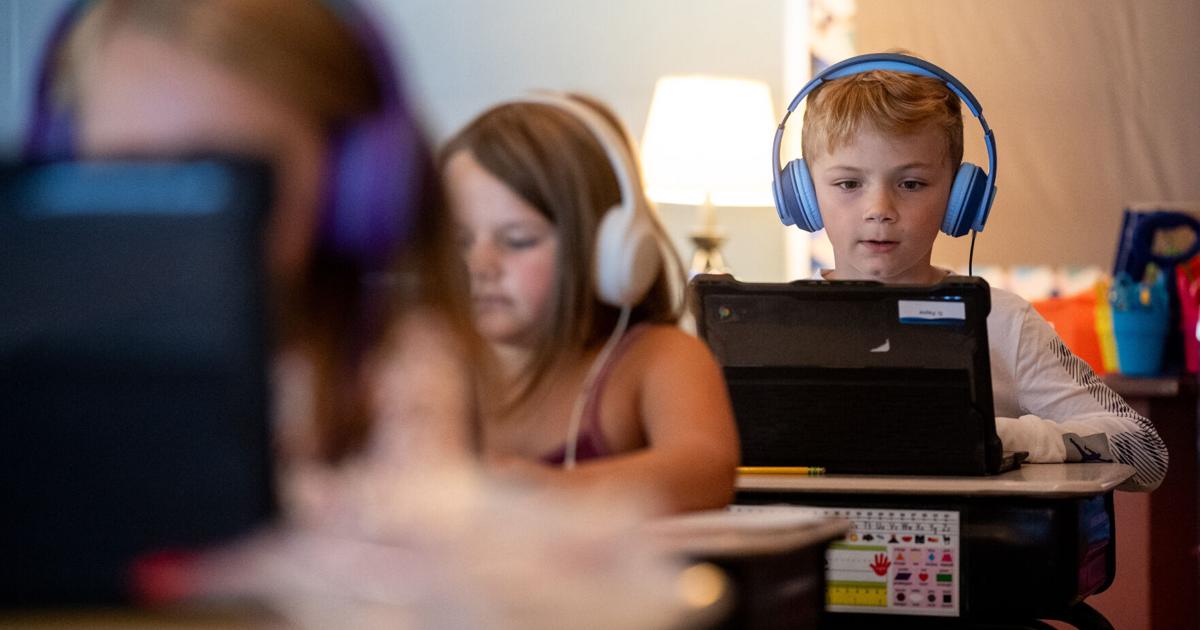
GROVE CITY – Although there are concerns that COVID-19 may have left a negative effect on young children, the post-pandemic life is making way for a future of digital natives, as schools and hospitals begin adapting technology to meet younger generations in the middle.
Hospitals such as Allegheny Health Network Grove City understand that technology is the way, and have a new YouTube series, Cai and Kate, which was developed by AHN Behavioral Health Specialists. It is used as a form of therapy for preschool and elementary-school aged children struggling with big emotions and emotional wellness, according to a press release from the hospital.
Although there was some positive influence following the pandemic, such as technological therapy, AHN officials recognize the pandemic’s negative impact on local children as well.
“These were children who were born in the time of lockdowns, and therefore were less exposed to interactions with adults and peers, had lower preschool attendance and in some instances, saw their screen time increase by nearly two hours every day,” said AHN Pediatric Institute Chair Joe Aracri, D.O. “As a result, we have seen some emotional and developmental challenges in this age group. We strongly encourage our families to work alongside our skilled pediatricians and clinicians through these fundamental years to ensure that their health and developmental milestones are being met.”
The American Academy of Pediatrics recommends about one hour per day of educational, high-quality screen time for kids 2 to 5.
Some schools are adapting technology into their academic curriculum. Mercer Area Elementary School is among them.
Mercer Elementary Guidance Counselor Allyson Rust said students in kindergarten and first grade use tablets, and students in second grade through high school have Chromebooks. She said she feels there’s pros and cons to this teaching style.
“I think everything has to be in moderation,” Rust said. “I think there’s always some good from the old paper and pencil, too.”
Rust said the heavy use of technology could hurt their attention span “because they don’t have the time to stop and think about this because an electronic gives you an answer so quickly.”
In Sharon City School District, West Hill Elementary School guidance Counselor Amy Hammond said the students receiving Chromebooks was a positive result of the pandemic.
“Through that, the students become tech savvy,” she said. “Our lessons can be adapted to their level, which is amazing. The computer is able to assist teachers in that way.”
She said they have also upped their social and emotional curriculum since COVID-19. Oakview Elementary, in Lakeview School District, has also incorporated a social and emotional program into their curriculum.
UPMC Clinical Chief of Adolescent Psychiatry Abigail Schlesinger said she isn’t opposed to technology being used in schools, but she’s also supportive of the fact that many schools have began to decrease cell phone usage.
“A device like a cell phone can get in the way,” she said. “That’s a problem. Instead of focusing directly on technology, I like to focus on the positives. Are we doing things to help our kids develop the skills they need.”
Although UPMC doesn’t offer any technological therapy, she said the hospital system treats children through speech therapy, occupational therapy, behavioral therapy, physical therapy, evidence-based intervention, parent child intervention, early childhood intervention and a wide variety of services.
Schlesinger said she has also noticed an increase use of technology among children outside of the classroom.
“We still know that having one to one interaction with adults and children to children helps development and we should be encouraging families to talk to children and encouraging them to develop relationships with their peers,” she said. “The increasing use of screens has been happening outside of the pandemic (and) in addition to the pandemic.”
link