



BIRMINGHAM, Ala. – As Americans continue to debate whether a college degree is still worth the cost, a new analysis from the Alabama Commission on Higher Education shows the answer is yes, even if college doesn’t always look like it pays off right away.
Using Alabama wage and earnings data, ACHE researchers found that college degrees continue to provide a lifetime “wage premium” in the state, a finding that mirrors what researchers have found nationwide for years.
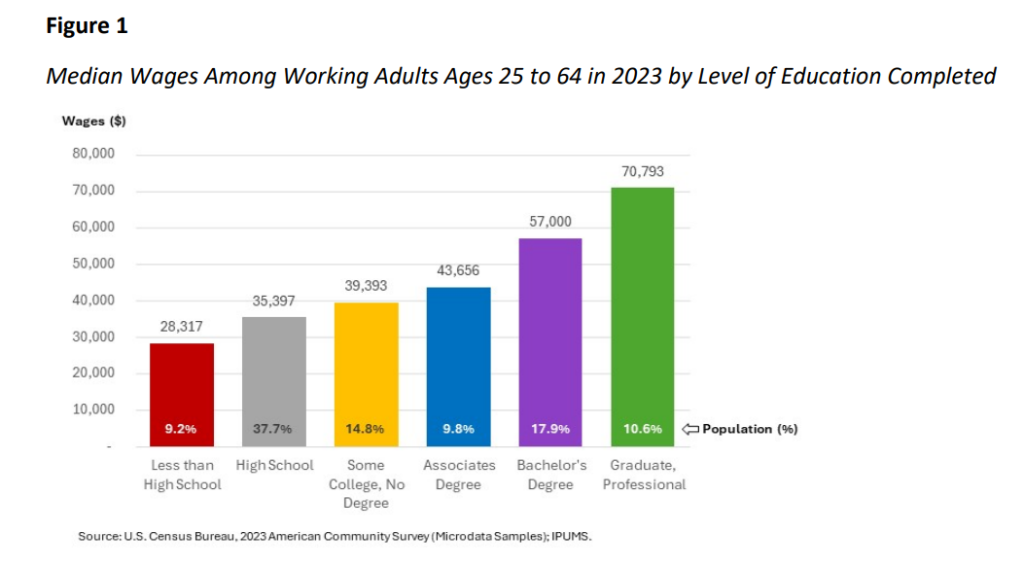

But that premium can be hard to see early on, as student debt has grown, the labor market has tightened and concerns have mounted nationally about how artificial intelligence could reshape entry-level jobs.
At age 18, median wages are similar regardless of education level, according to the analysis. In the years immediately after high school, workers who skip college often earn slightly more than those who enroll.
That early advantage doesn’t last.
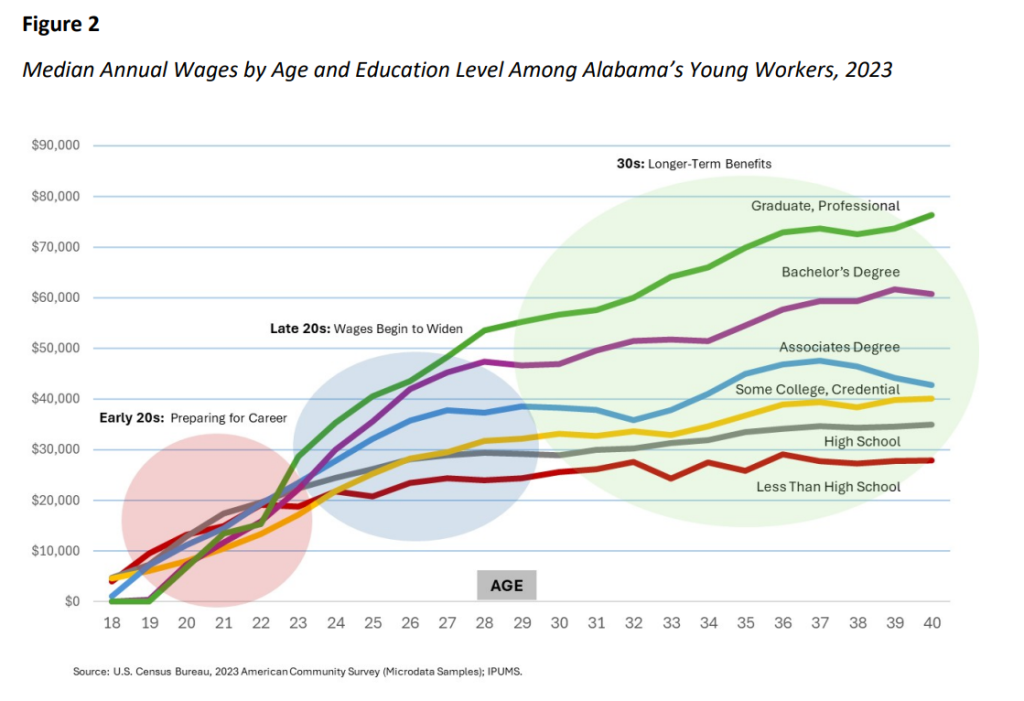

By workers’ mid-20s, wage differences by education level begin to show up. By age 30, workers with postsecondary credentials, including associate and bachelor’s degrees, earn nearly twice as much as workers without them, according to ACHE’s analysis.
The gap keeps growing as careers progress. Workers with bachelor’s or graduate degrees tend to keep seeing their pay rise through their 30s, while wages for workers with only a high school diploma or some college but no degree tend to level off much earlier.
Over time, even relatively modest annual differences add up to large gaps in lifetime earnings.
That matters in Alabama, a state that has long struggled with low educational attainment and low labor force participation, ACHE noted.
The benefits of higher education extend beyond individual workers, according to the report.
“As more of Alabama’s working-age residents achieve higher levels of educational attainment, they earn more income, which stimulates state and local economies – resulting in additional tax revenue and the stability of communities,” the report states.
Skeptics of higher education point to other reasons college degrees don’t hold value. College graduates often take on significant student debt, and the financial return can vary widely depending on a student’s field of study, the institution they attend and whether they complete a degree.
For students who leave college without graduating – a common outcome in Alabama – the expected wage premium may never materialize.
In response, Alabama has expanded efforts aimed at better connecting education and jobs.
Those include growing dual enrollment programs, expanding short-term and stackable credentials, and increasing apprenticeships and other work-based learning opportunities.
The state has also launched programs to help adults who previously left college return and complete degrees tied to high-demand fields.
The report emphasizes the importance of using real wage and employment data – not just enrollment or graduation numbers – to judge whether education programs are paying off.
By linking education records with wage data, researchers say policymakers can better identify which degrees and credentials consistently lead to stable jobs and sustainable pay.
ACHE cautions that not all credentials deliver the same economic return and that programs poorly aligned with workforce needs may need to be reworked.
Future analyses will examine how wage premiums have changed over time and which degrees and credentials best match Alabama’s current and future economy, ACHE wrote.
link